Interviews about research in the Computational Systems Biology Laboratory

banner_20140717

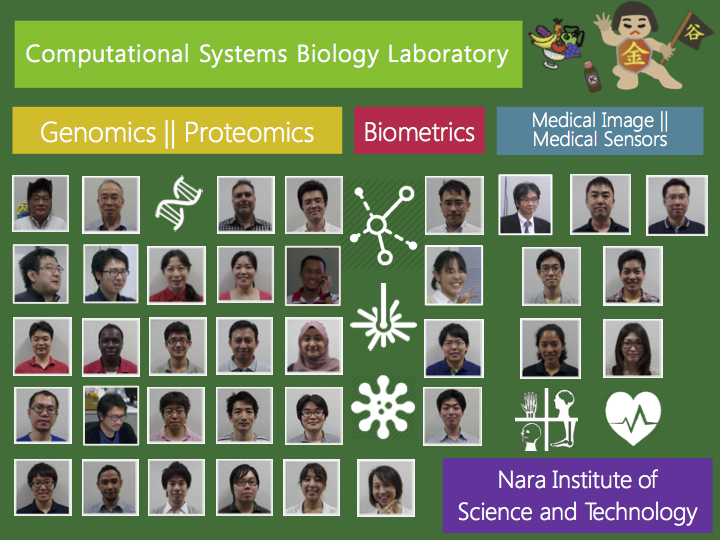
The CSB lab is one of the most diverse groups in the school of information science in terms of both the scope of work we do and members’ background. Despite that this occurred incidentally, these factors have become the building blocks of the dreams and goals for this
Lab. This can be also regarded as an evolution of the way research is conducted.

Like many a grad student in NAIST, we are used to being asked what our research is about. Members of our lab treat this question with as much excitement as uncertainty. This is because systems biology is a relatively new area of research. It is exciting to imagine the potential of this nascent field. For example, cancer systems biology is a promising area, which might become the main strategy for building the next generation of diagnostic and prognostic tools for cancer. Another good example of its grand potential is its contribution toward understanding the human genome so far. Regardless of its potential, it still remains amorphous to some extent -and from my personal experience- it is hard to explain to those unfamiliar with systems biology. Most people do not pay much attention to this “grey zone” between biology and informatics. To spread the words about this field we are always open for those who come to us with curiosity, and the willingness to know more about our work.

Our group is made of two main units: the systems biology group and the biomedical engineering group. Each group has their own sub-groups, such as genomics, medical imaging etc. Many would describe our lab differently. Lest we put words in anyone’s mouth, we sought to find perspectives of some lab members. While at it we asked what they do and what they find to be interesting in our lab. Here’s what they had to say:

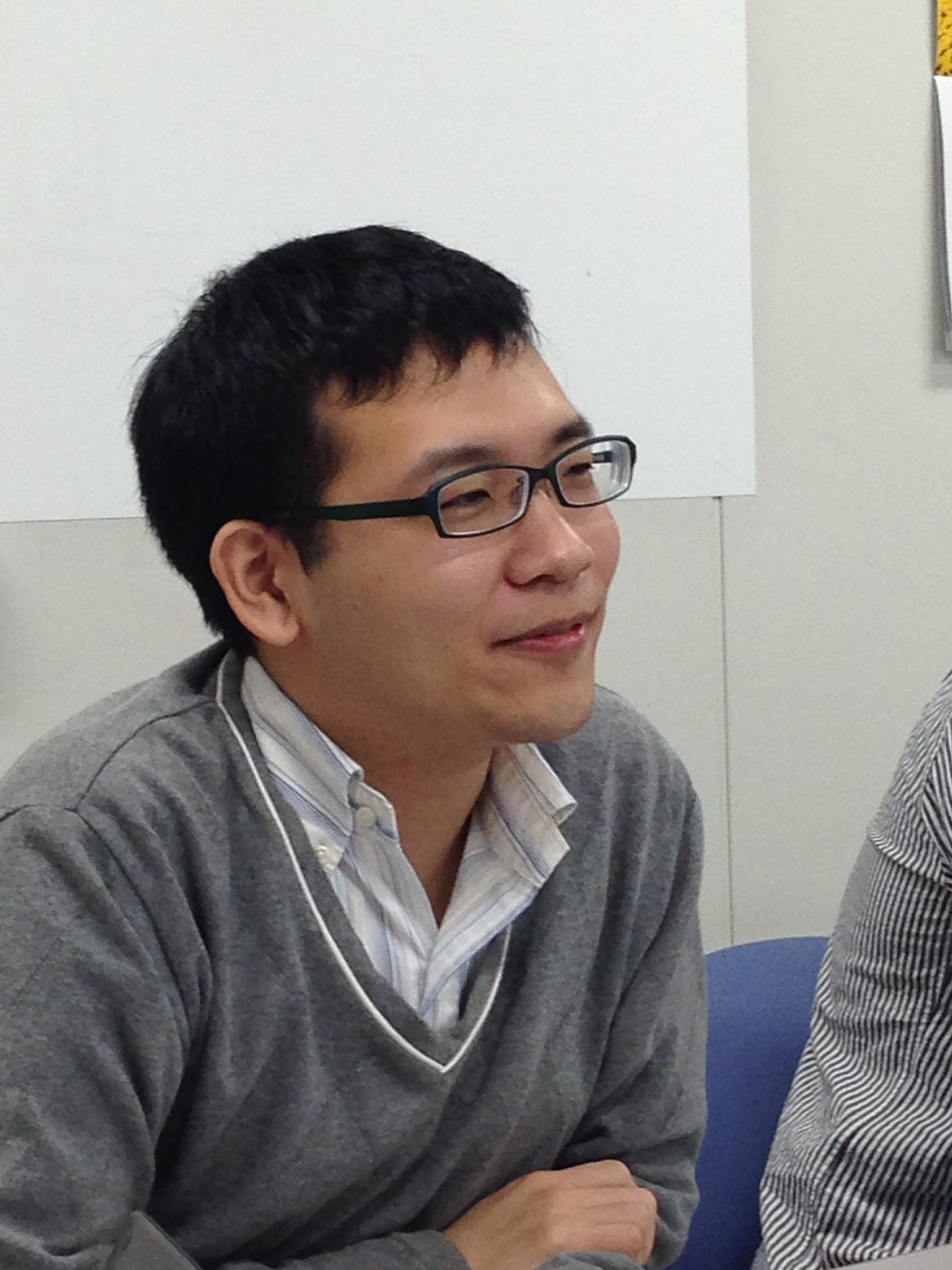
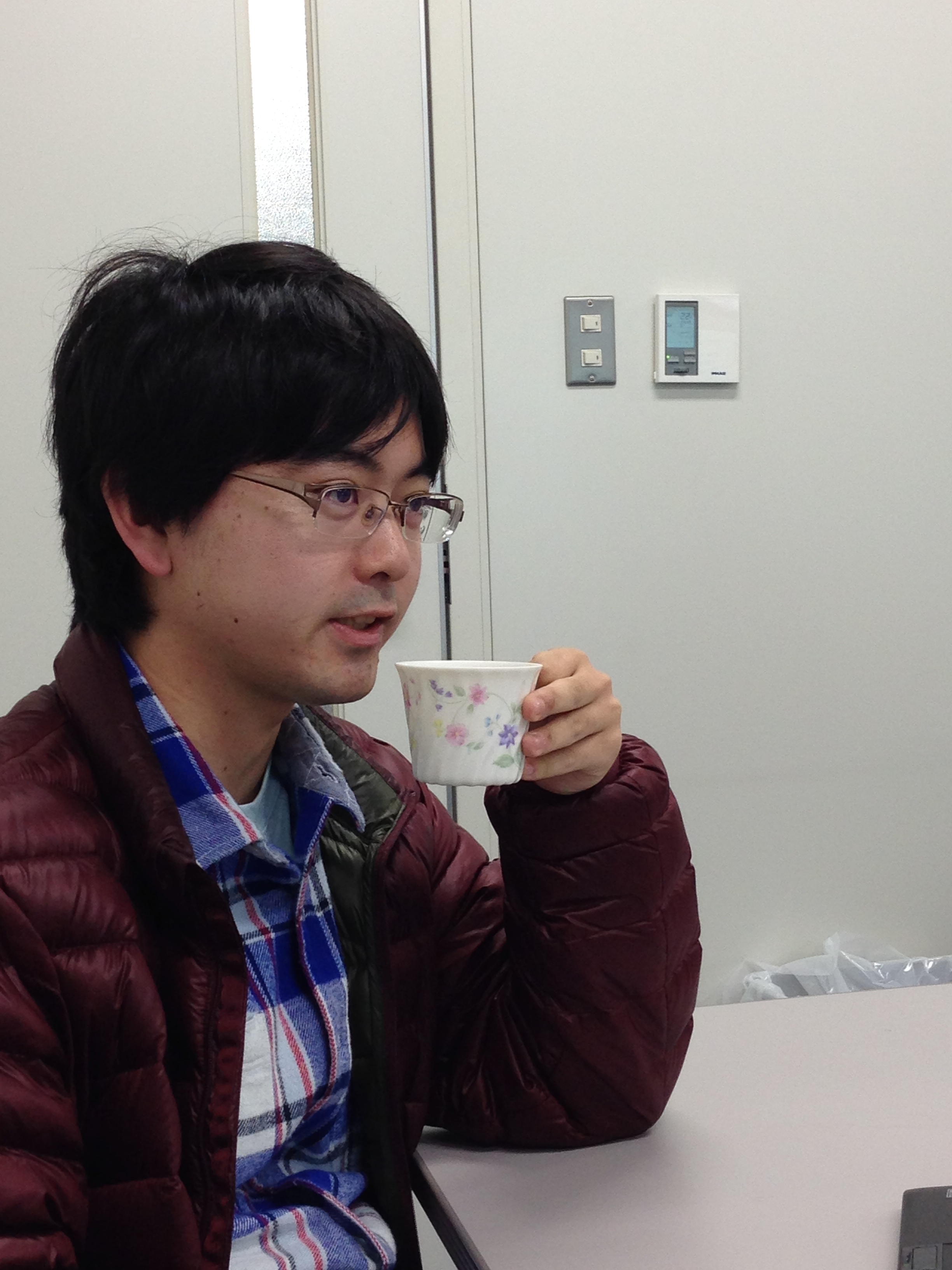
Tetsuo Sato:
Assistant Professor,
Biomedical Engineering
IMGP0960

What is your research about?
We develop and analyze image-processing methods. I am interested in imaging technologies for non-invasive medical imaging technologies, more specifically of the heart and the brain.

What is interesting about the CSB lab?
The diversity and breadth of the research themes mean that we can collaborate, share new ideas and thoughts in a way that opens up our minds to new knowledge. We have people from different thematic backgrounds and the union in diversity is one of our key strengths. On the social side of things, the entire group is open and fun. Everyone is active and the aura of the lab is always of a welcoming nature.

Do you have a recommendation to anyone who would like to join the CSB lab?
We pride ourselves in the open nature of the lab. Freedom to learn does not get any better than at CSB and besides, the expertise we have in the different areas means you get useful advice for your research. There is a chance for everyone with an interest and a minimum set of skills to survive the pressures of bioinformatics and biomedical engineering research.

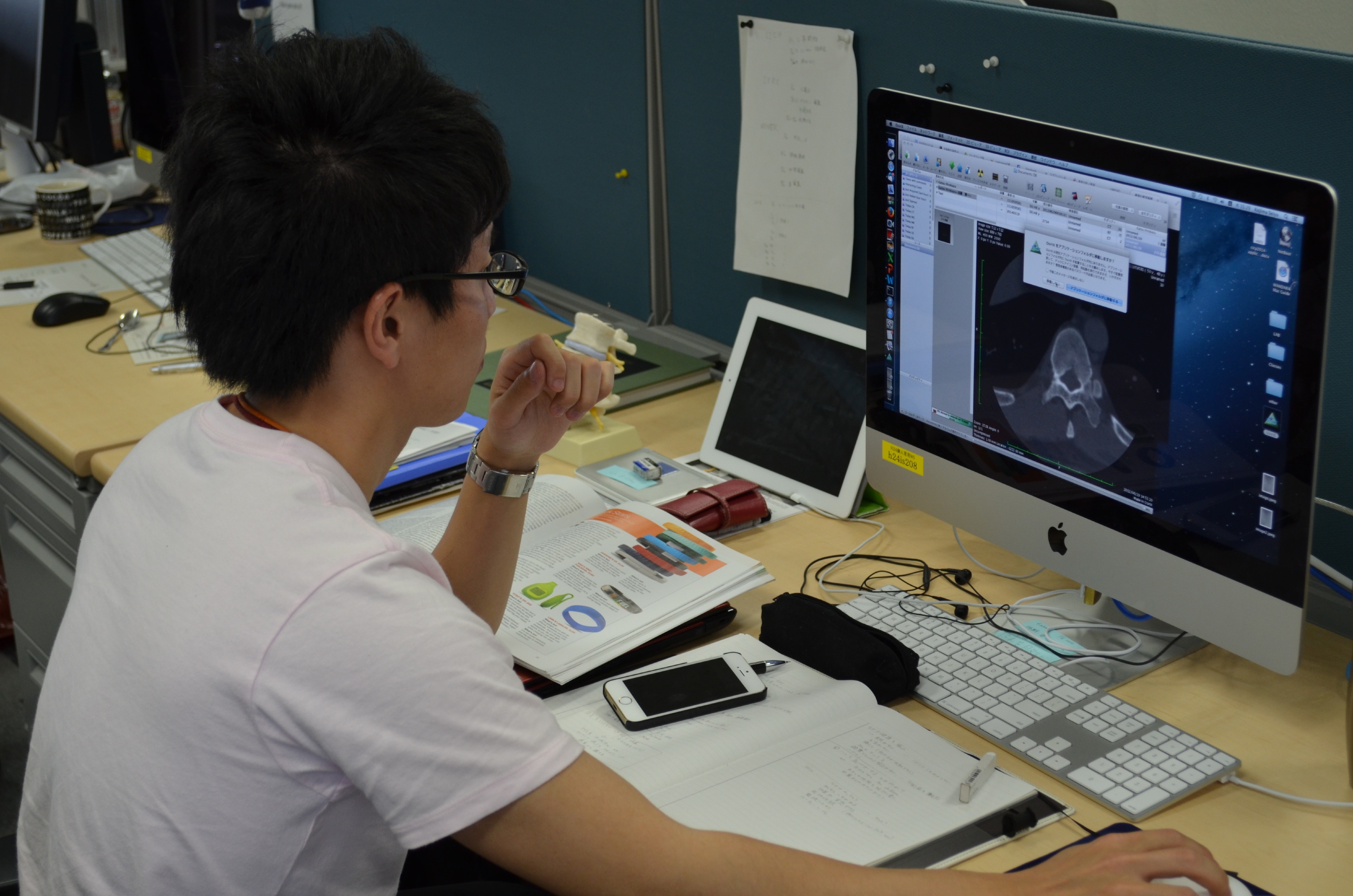
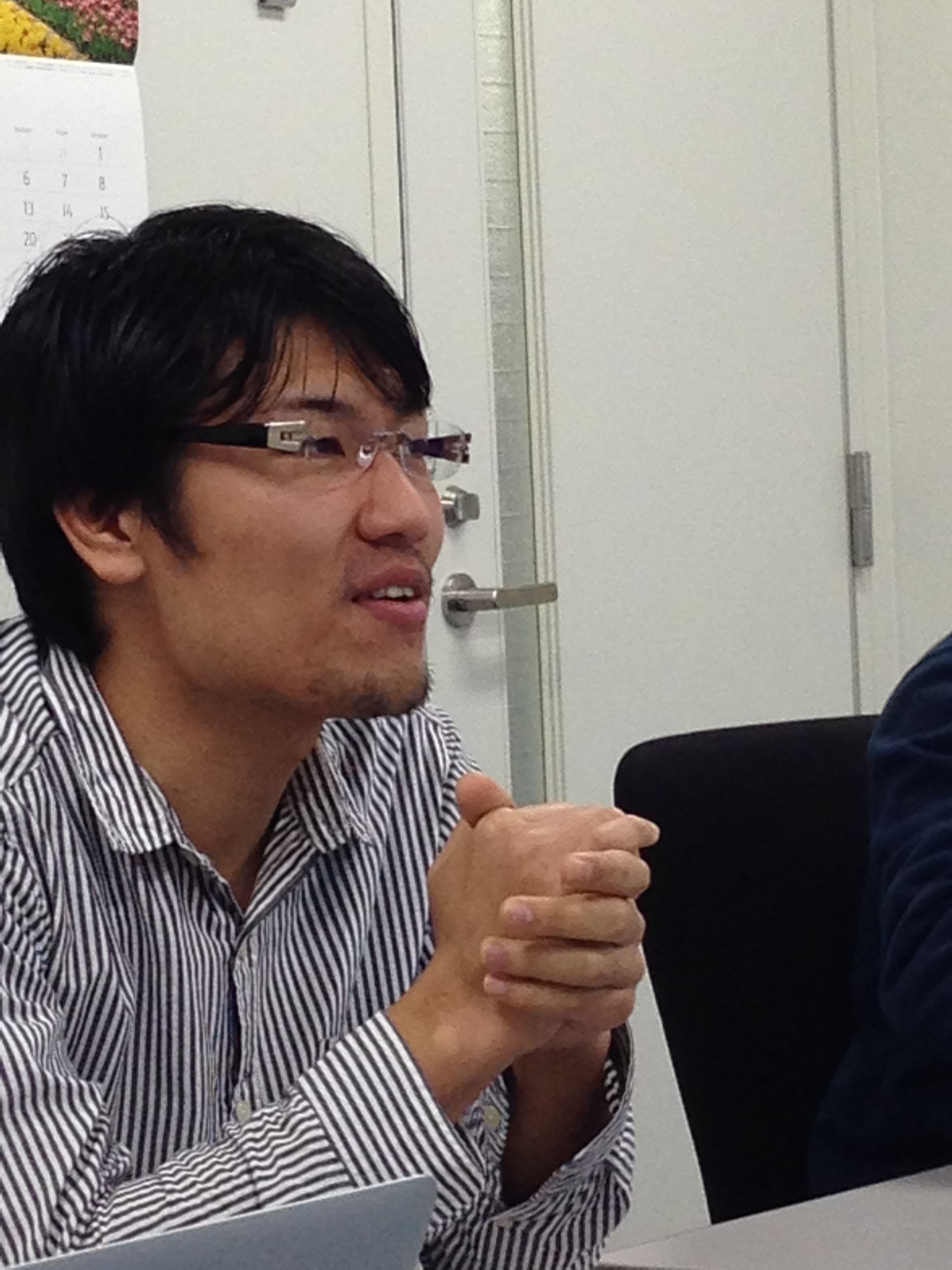
Tetsuo Katsuragi
Doctoral student D3,
Systems Biology
IMGP0948

What is your research about?
My work is about simulation of metabolite concentrations in plants. Before you get scared of the jargon, I simply want to say that I try to use computational techniques to cover an area of plant metabolomics that would be hard to do experimentally.

What is interesting about the CSB lab?
There are a lot of foreign students and staff from different cultures so we get to learn about each other. Besides this, we have a lot of informal gatherings like a famous Friday “Nabe party” which has become a platform to discuss details, all about work and social matters.

Do you have a recommendation to anyone who would like to join the CSB lab?
Few words: Do not hesitate. You will certainly find something to do at CSB.

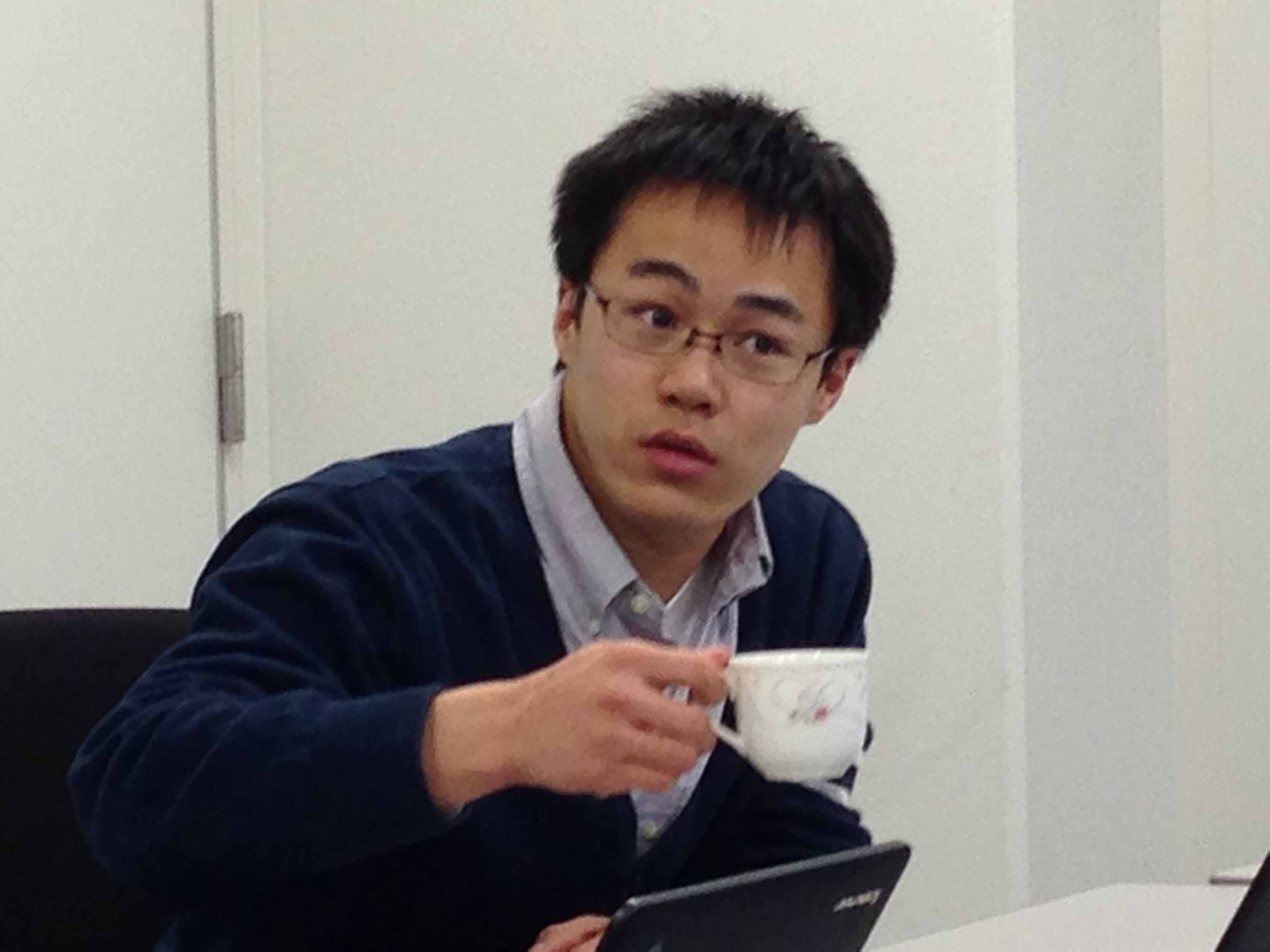
Eguchi, Dejima and Kawakami:
M1 students,
Systems Biology and Biomedical Engineering
IMGP1022

What is your research about?
Eguchi: I am interested in transcriptomics and I am trying to find a niche to begin my research.
Dejima: I am also trying to settle on a research theme, but I am interested in medical engineering especially imaging technologies such as MRI and PET.
Kawakami: Just like my colleagues, I haven’t quite settled on a theme yet, but I have some interest in systems biology and genomics of mental illnesses.

What is interesting about the CSB lab?
Kawakami: All members are very kind, interesting and unique. I am already looking forward to the lab trip this summer so I can get to interact more with my colleagues.
Dejima: Guys are nice here. It has been enjoyable and easy integrating into the flow of things at CSB.

Do you have a recommendation to anyone who would like to join the CSB lab?
Kawakami: We welcome everyone and if you pass near my desk, you’ll most likely find some “Omiyage” to sooth your stomach as you go about your business at the CSB.
Eguchi: Well, the activity galore would certainly impress you if nothing else does. You’ve gotta try the “Nabe party” and join our softball team which by the way I heard are the current champions of NAIST softball.

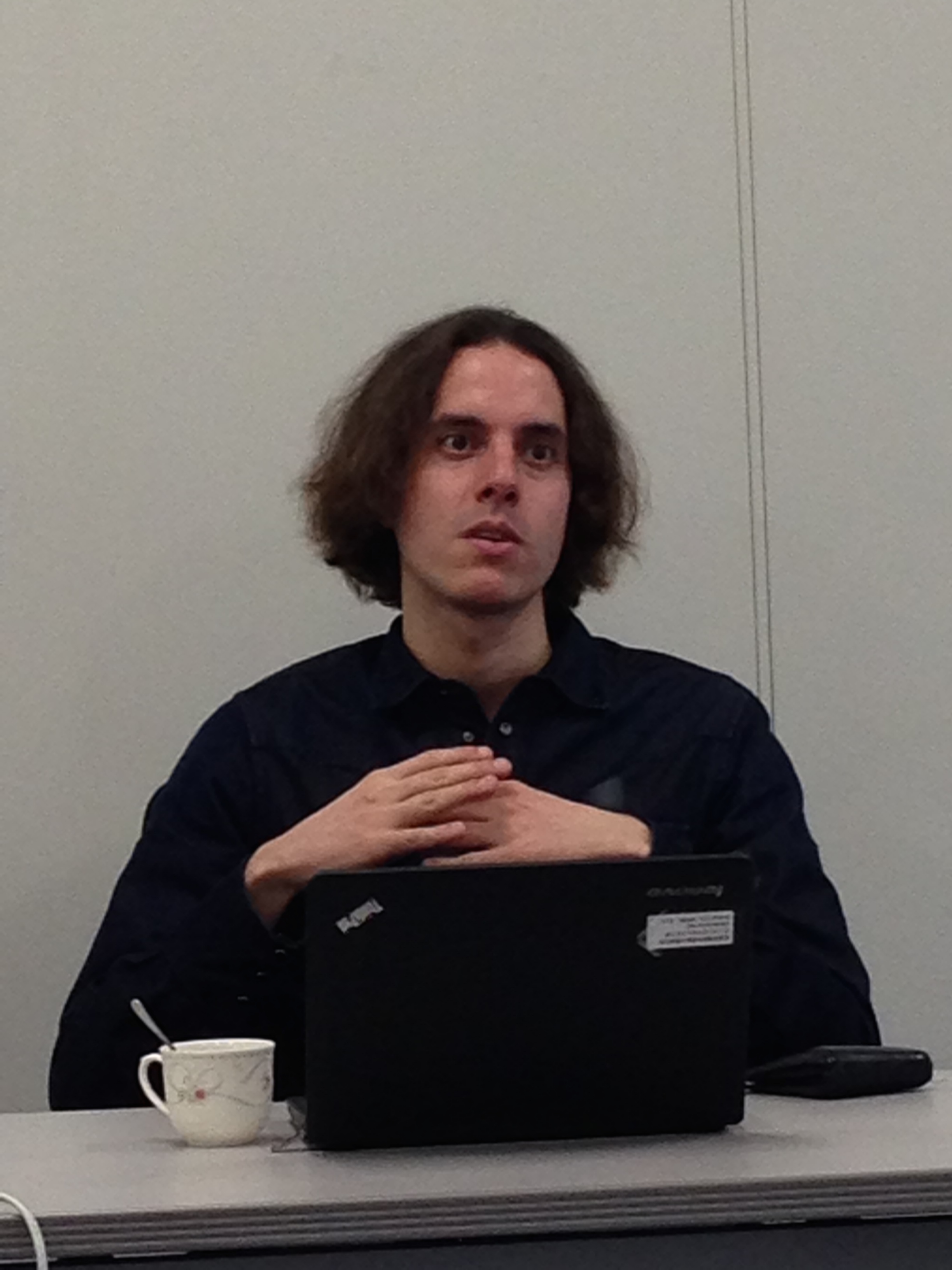
Azian Azamimi:
Research Student,
Systems biology
IMGP0969

What is your research about?
I am trying to develop a database of volatile organic compounds, some of which are useful as biomarkers of human disease.

What is your experience and impression of the CSB lab?
Since I arrived here, it has been a good experience. As an international student, it would have been hard to adapt when I first came, but NAIST provided a tutor from the lab. He was very helpful to me. CSB lab is also fun because of the many activities and sports we participate in.

What would be your recommendation for anyone who would like to join the CSB lab?
Joining this lab would definitely be a good experience. You will need to have some biology and some computational knowledge to better cope with research here. With this you can look forward to publishing in journals, attending conferences and becoming a better scientist.

What could we possibly add? Enough said.
Interactive Media Design Laboratory

Oral Kaplan
Master’s Degree Student
Interactive Media Design Laboratory
Graduate School of Information Science
imd-p1

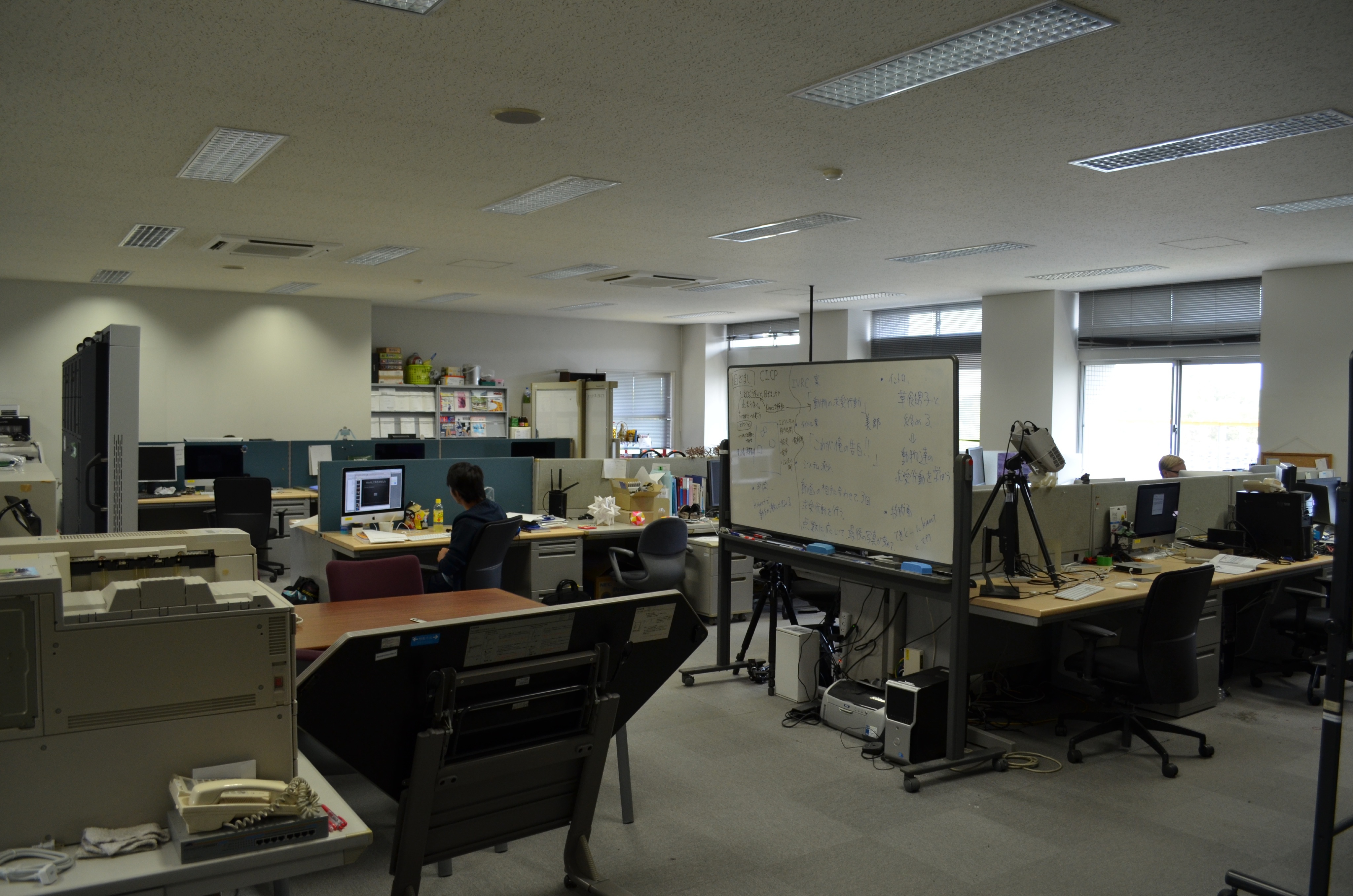
It has been almost 7 months since I started my new life in NAIST, in Interactive Media Design Laboratory, and I am pleased to say that life is good, both professionally and personally. Well, as you might guess at first it was too boring. If you bring a 24 years old metropolitan kid to a rural area like Takayama, of course it is going to be too boring. But this is life, you have to change for the better and move forward with every passing moment.
That’s being said, as a MEXT Scholarship Student I am glad that I have been selected as one of the privileged students in here. It is obvious that the main reason why I wanted to be a part of NAIST was completely professional; I wanted to study in an institution which specialises in what they are doing. Well, I would also prefer a more lively area of course but nothing is perfect. There is one thing I am sure of, I am glad that I am a part of Interactive Media Design Laboratory. “Are you saying other labs are not good?”, of course I am not saying or implying that, but for the time being this is where I belong.

imd-p2

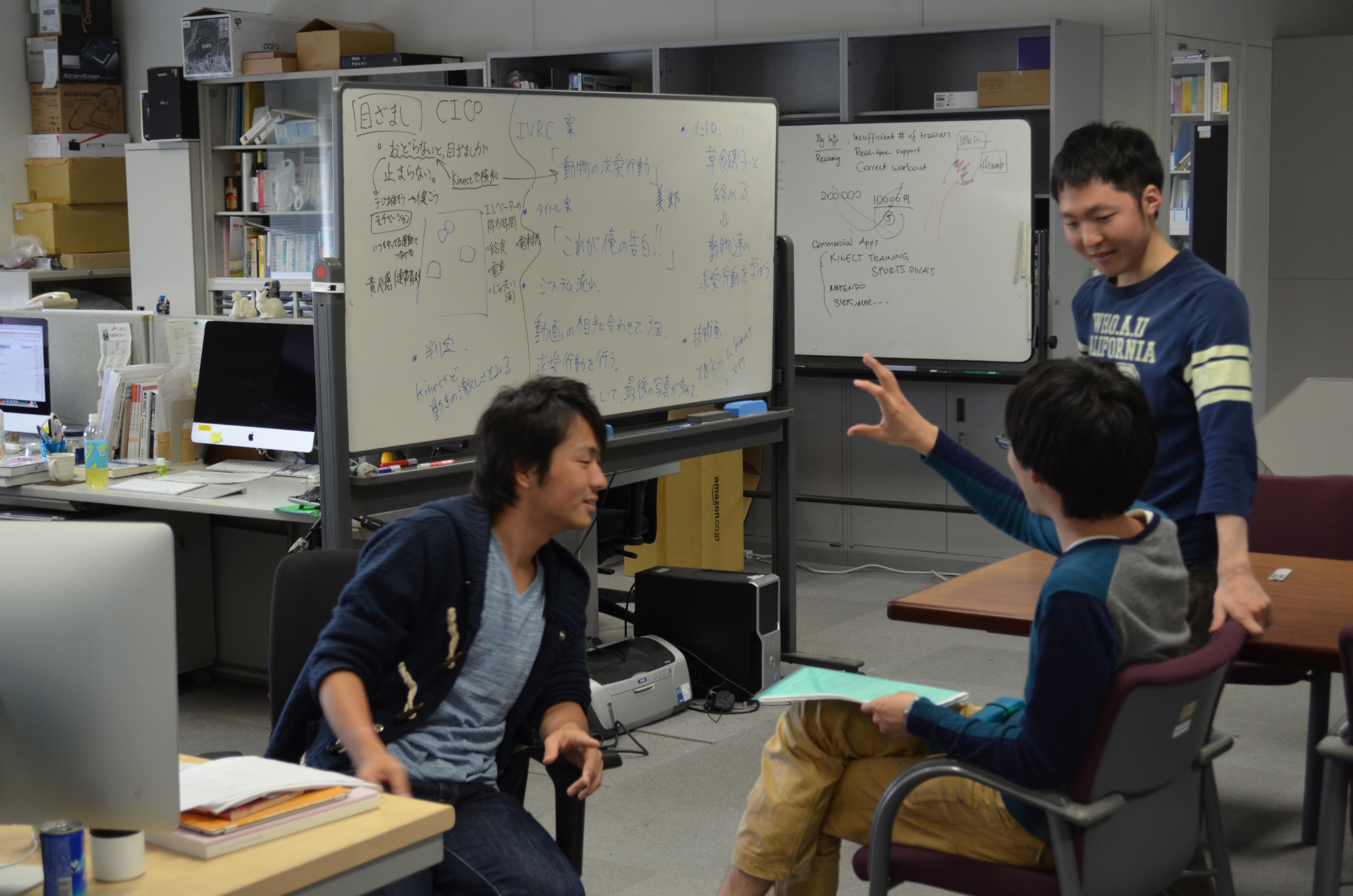
What are we doing here? As one might guess the name ‘Interactive Media’ governs a huge field of expertise. If you take look at our laboratory’s web site, you can see that almost all of our researches are connected to usage of visual information in one way or another, yet at the basic level they are so different from each other. Of course as I mentioned before the word ‘Interactive Media’ governing different things inside is a cause for this result, but not only by itself. One thing, and I think this is something special about our lab, the first thing a student encounters after enrolling is a simple question; ‘What do you wanna do here?’. Simple, yet intuitive and effective. We all agree that it is no fun to work on something that you have interest at all, but in Interactive Media Design Laboratory, the collaboration between professors and students allows us to be productive in a field that we like, and what we want. Surely you can encounter some special cases too, not everything worths a research, this is where our professors world-wide acknowledged expertise comes in handy. Ow, did I forget to mention that our professors are highly accomplished and recognised in their fields internationally?

imd-p3

After all this talk, you might think ‘Yea, yea… But what do you do?’. Sorry to disappoint you but I also have no clear answer to this question, at least not yet. Well, for outsiders I might seem like an experienced member of Interactive Media Design Laboratory but I am a new student. At the basic level, my research area is going to be, probably, somewhat related to the application of interactive media methods in sport activities. One idea we currently have is ‘Workout Routines with Real-Time Motion Tracking Support’. Most people are wasting a lot of money on wellness activities just to obtain their dream bodies, why not make it less money and time consuming from the comfort of your home? This is subjected to change anyways, so it would be pointless to discuss this deeply here. Maybe I can find a better reasoning for my research. I guess the time will tell.
Aside from studying, if you are reading this right now, which is in English, you are either another fellow foreigner, or a Japanese whom is interested in learning English or having some conversation with a non-Japanese person. Feel free to drop by anytime, our lab will welcome you with a cup of coffee. With an amazingly high percentage of foreigners from different parts of the world, I think a sip of cultural shock would not be that bad. At the end, we should all agree on that variety is what makes a difference in this world…
I am leaving the scene to my colleagues and hope you will also enjoy their thoughts like I do.

Best regards.

=====================================================================
Amar Husejic
Master’s Degree Student
Interactive Media Design Laboratory
Graduate School of Information Science
imd-p4

When I entered NAIST as a Research student I was very excited to see people working on many different projects and ideas. It was very motivating since I was at the beginning of finding my own research topic and I knew that it was going to take some time. Also on that road we find out that not everything is interesting for us since that factor depends from person to person. After that you start to look at the research in a different way, so something what seemed interesting wasn’t anymore. Something that seemed interesting may still be interesting but the way of doing that might be boring and demotivating. So in this article I would like to talk about the ongoing researches in my laboratory which I hope that will inspire you to continue what you are doing even though it may seem hard or boring. If you truly believe in what you want, I think you should pursue it.

———————————————————————

#Title: Project MARUI – Towards Augmented Reality User Interfaces in 3D Media Production
#Name: Max Krichenbauer

#Abstract:
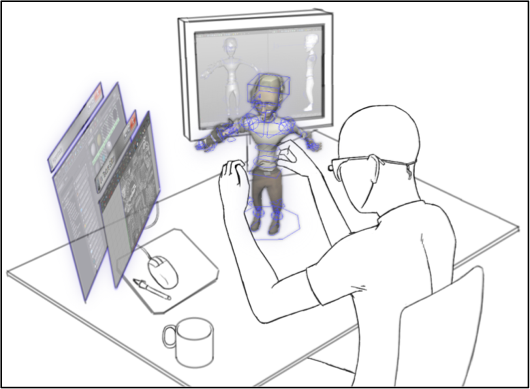
We analyzed the requirements for professional 3D design and developed a novel Augmented Reality user interface for 3D artists. This allows media professionals to work on their models as if they were physically present on their desk. This approach can make the creative work more efficient and less tiresome.

imd-p5

#Questions:
1. What is the motivation behind your research?
I want to invent new tools and devices. It is exciting to think that someday people will use my tools for their work. It is also fun to learn (often required – not just for classes), and work with new equipment. 

2. Can you tell me what is or what was the hardest part of your research?
It is development. Trying to get things to work within limited time, while still taking classes is difficult. Also having to work with undocumented and often unclean code/libraries required for the project. More than once I had to dig through totally uncommented code from another developer, just to find a silly bug – that is: after spending even more time trying to find the bug in my own code.
3. Do you have a message for prospective NAIST students?
Don’t try to improve the campus social life. The people here are very happy without a social life or the limited social life of their lab. Find a social life outside of campus or start playing online games.
4. Will you continue to work on your research after graduation?
Yes, as a PhD student.

———————————————————————

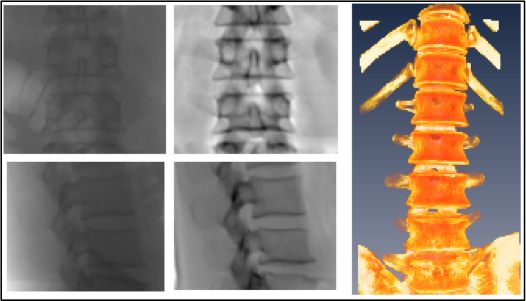
#Title: Lumbar Vertebrae Pose Estimation using CT deformation for Diagnosis Assistance
#Name: Henry Chu

#Abstract:
The diagnosis of lower back pain often involves the examination of medical images such as x-ray and CT, but the poses of spine are different when taking these images making it difficult for radiologists to relate. In this research we minimize such pose difference to assist medical diagnosis by deformation of CT and registration with x-rays.

#Questions:
1. What is the motivation behind your research?
The motivation for my research is to help the doctors in the medical image diagnosis of lumbar spine. The current diagnosis requires the doctors to mentally relate the same anatomical structure in different image modalities (3D CT and 2D x-ray) where the poses of the spine are different. This research aims to make the pose of the spine identical by deforming the 3D CT volume to the pose of the 2D x-ray, as the result the doctors can reason between the medical images easily and hence improve diagnosis.

imd-p6

2. Can you tell me what is or what was the hardest part of your research?
Since we are working with medical images where they are intended to be used to make diagnosis of real patient, the biggest challenge is to acquire high accuracy of the deformation result to ensure correct diagnosis.

3. Do you have a message for prospective NAIST students?
It’s best to choose the research topics which interest you the most since they will become your motivation in the long run.

4. Will you continue to work on your research after graduation?
If possible I would love to work with medical images in the future since they are directly related to the application with the medical world.

=====================================================================
Damien Constantine Rompapas
Master’s Degree Student
Interactive Media Design Laboratory
Graduate School of Information Science
imd-p7

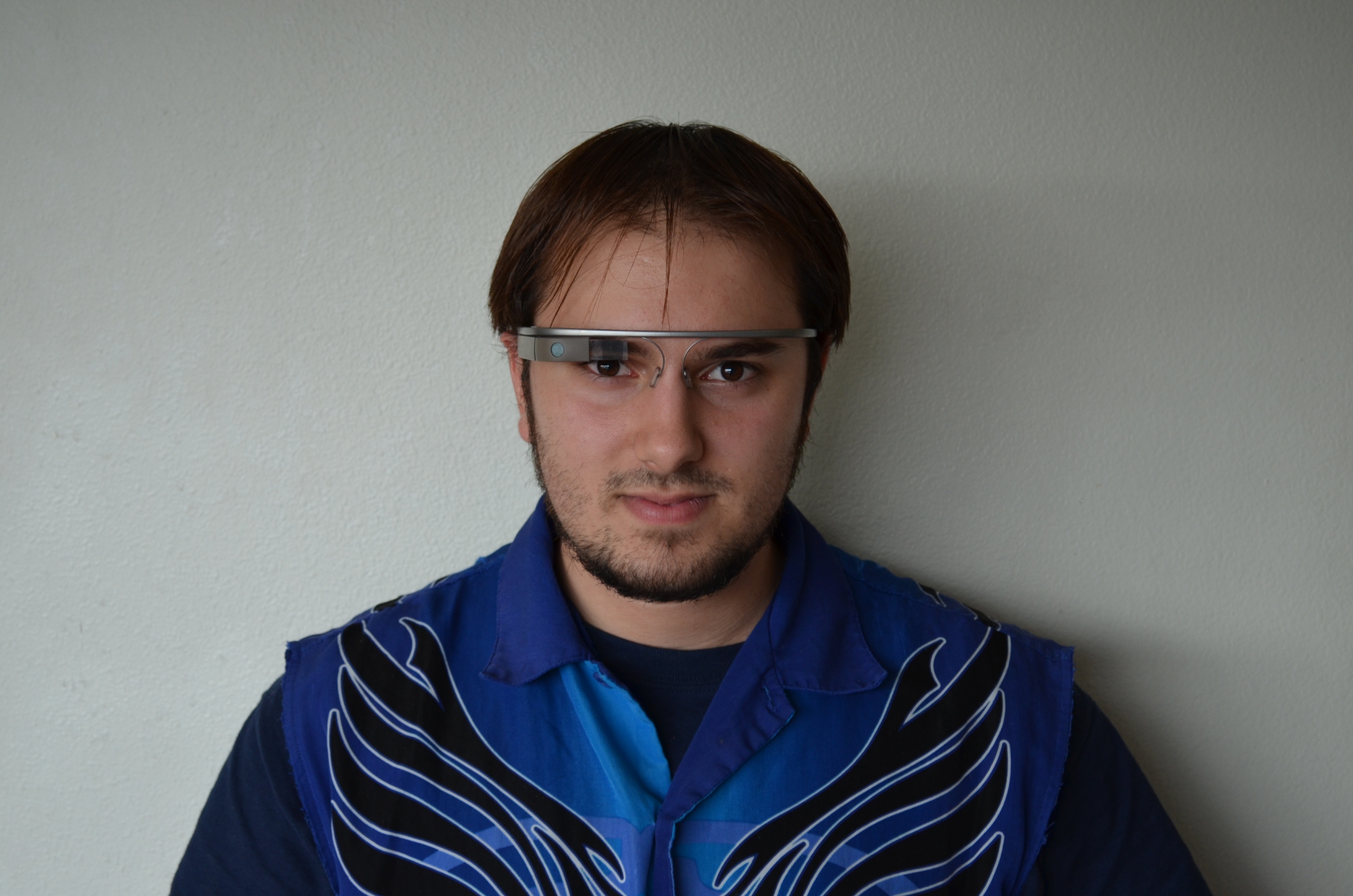
My name is Damien Rompapas. I am 21 years of age and I came to NAIST from Australia. I am an M1 student and work in the Interactive Media Design Laboratory.
Although I arrived a week late into the starting semester (April) I was still able to catch up to the work that I had been given very quickly, the staff were very helpful with helping me get setup with the on campus dormitory and all of the paperwork that was required. My lab even appointed another student to assist me with the first month of living in Japan. He was very kind to help us with getting used to life in Japan; such as getting my Japanese Residency card or to getting some money out of the ATM, as my Japanese level is close to zero.
After A week or two there was a hosted M1 Students Welcome party, which was fantastic. I had the chance to meet with a lot of people whom were also new to NAIST. Although some Japanese students were very shy, I think they also had a great time.
Classes are really enjoyable. Although I already had most of the knowledge the lectures provided due to my Bachelor Studies in Australia, I still learn a few new fundamentals. But one thing is for sure; the lab environment in here is just wonderful. It allows me to get dug-into my research and complete any tasks that I wish to complete.
Life outside the lab is just as enjoyable. My dormitory isn’t exactly large, but I quite like it. It has a small kitchen and a private bathroom, as well as a desk, wardrobe, fridge and a bed. Not only that, the campus has it’s own cafeteria which provides very affordable, but completely nutritious meals. I do love to cook, but I may be so busy that I will not get the time to cook for myself; so having a place like that on campus is a huge bonus.
Everyone in my lab is very friendly. I have already become good friends with each lab member; especially the Japanese students here are really kind! I was very surprised when my lab encouraged the use of English because if foreigners had come to the university where I came from surely they would have been forced to use English. I was not expecting it in Japan since English is not the native language.
However I do wish to learn and speak Japanese fluently. I am grateful that NAIST has a volunteer group who teaches Japanese to those whom are just beginning. I try to study as much as I can, but every time I try it seems like I mess it up. Everyone I try with is very patient, of course which is very nice.

imd-p8

Every time I walk into the lab, I feel that it is a great honour to be able to work in such a nice environment and I believe my work reflects that. Within the first month I produced an Augmented Reality project using the Google Glass dubbed “Miku Dance”, where the user would be able to see a life sized Hatsune Miku through the glass that would dance and sing for you. It was very popular when I demonstrated it for the recent Open Campus. Which pleased me greatly!
I look forward to continuing my studies in Nara Institute Science and Technology and provided I complete my Masters Degree, I am planning to continue with further studies as a PHD student.

ディペンダブルシステム学研究室 ~ 修了生インタビュー ~

ディペンダブルシステム学研究室では、ディペンダブルな(頼りがいのある)システムの実現を念頭に、VLSIの設計とテスト、分散アルゴリズム、並列アルゴリズム、データマイニングなど様々な研究に取り組んでいます。本研究室に入学した学生たちはまず、講義や輪講を通じて基礎的なことについて勉強します。また、M1の夏には韓国ハンバット大へ2週間インターンシップに行きます。その後は、各学生の興味分野について研究を推し進めていき、その成果を国内外の学会や論文誌で発表します。学生によっては企業との共同研究など実践的なテーマに取り組むこともあります。そして最後に、自身の研究の集大成として修士論文を執筆し、発表します。そんな2年間を過ごし、2014年3月で修了し本学を巣立っていく学生たちに、NAISTでの生活、研究について感じたことや、経験に基づく後輩たちへのアドバイスなど、色々聞いてみました。

it

Q1: 2年間の研究を終えてみてどうですか?

Ni: 僕は企業と共同研究ができたので、非常によい経験ができたと思っています。研究に関して学べたのはもちろんですが、実際に会社に入る前に企業の方と接することができ、研究以外にも役立つことを学べたと思います。ただ、毎月ミーティングがあり、それに向けて何らかの進捗を出せるように頑張らないといけないということで、学内でも毎週打合せをしていたので、そこはしんどかったですね。でも、もし後輩が入ってきたら、(同じようなことを)やるように絶対勧めたいと思います。研究自体やっていて面白いし、プレゼンの練習などよい経験ができるので、進学するにせよ就職するにせよ経験しておくとよいと思います。

It: 2年間あっという間に過ぎましたが、海外に3度も行くことができ、入学当初に予想していたより色濃い、起伏に富んだ2年間でした。特に、入学した4月から、夏に韓国ハンバット大へインターンシップに行く直前までの間は、授業を受けたり、現地で紹介する論文を読み始めたり、輪講の準備だったりと、出身の高専ではあまりやらなかったようなことを密度濃くやっていたので、記憶に無いというと語弊がありますが、細かく思い出すのが難しいくらい色々やっていたような気がします。また、学会発表の準備に苦労しました。文章を書くよりはコーディングをしたりものを作ったりする方が好きなので。ただ発表となるとそれなりの形になって人の目に触れるので、中途半端ではいけないと思うとなかなか時間がかかってしまい、そこは結構苦しかったです。でも、学会で会う方々とコミュニケーションをとって、質問していただいたり評価していただいたりすることで、論文の中で説明不足だなと気付くところだったり、検証が必要なところだったり、自分だけでやっていると思いつかないような点について考える機会は増えるので、そういう面で発表する機会を与えてもらえてすごく良かったと思います。なので、スケジュール的には大変になりますが、これから入学してくる後輩たちにも是非学会での発表を勧めます。研究は自己満足で終わってはいけないと思うので、成果としてよいものが得られるかどうかはともかく、自分が出した成果を人に評価してもらったり、公の場で検証してもらったりする場を持つことは大切だと思います。

Na: 出身の高専ではハードウェアに関する研究をやってきて、NAISTに入学してから分散アルゴリズムに興味を持ち、新しい分野を一から勉強しなおすところから始めたので、やはり、慣れ親しんだことを続けている人と比べると、スピードが落ちてしまいました。先日、分散アルゴリズム関連の学会発表に行ってきましたけど、他の学部生の発表とかが自分のやっている内容と同じレベルぐらいに感じたりして。研究分野を変えることには一長一短あると思いますが、個人的にはスペシャリストよりはジェネラリストでありたいと思っているので、いろいろな分野を勉強できてよかったと思っています。また、研究室では大きく分けて(ハードウェア、アルゴリズムの)2つの異なるテーマに取り組んでいる人達がいるので、自分の研究に関して輪講とか発表練習とかで話すと、他分野の人達が気になる点を聞いてくれて、それが自分では気が付かないことだったりするので、他分野からの視点というのも勉強になると思いました。

Yu: 私はドイツからの留学生ですが、日本の学生が1年目の半年ぐらいで必要な単位を取っていく中、英語の講義も少なく、最初の1年間は講義に追われ、2年目から研究を始めることができました。国際コースがあるとはいえ、カリキュラムがもっと充実するとよいと思います。研究は非常に面白く、楽しんで取り組むことができました。NAISTはドイツと比べて自由に研究ができる印象です。特にディペンダブルシステム学研究室は学生数に対して教員数が充実していて、毎日先生方と研究について話せたのがよかったです。私も大学院に入ってから分野を変えて論理回路のシミュレーションに関する研究に取り組んだので、初めはとても難しかったです。この1年間、色々なことを勉強して、私がこれまで取り組んできたハイパフォーマンス・コンピューティングの技術を論理回路のシミュレーションに取り入れることが出来ました。

Mi: 僕は高専でもハードウェアに関して勉強してきたので、研究の背景などは分かっているつもりでしたが、実際に研究成果が社会で役に立っているのか、よく分かりませんでした。でもNAISTに入って、色んな研究テーマがあることを知り、それが実社会でも応用されていることを知りました。そこから、もう一度きちんと勉強し直したいという気になりました。僕も文章を書くよりは自分の手を動かしてプログラムを作って、結果を取って、そこから何かを考える方が好きなので、実装している時が特に楽しかったです。一度作ったプログラムがうまく動作しなかった時はショックでしたけど、そこからもう一度作りなおして成果が出た時は、本当に嬉しかったです。

na

Q2: 韓国ハンバット大での2週間のインターンシップはどうでしたか?

Mi: こういう機会を与えて頂いてよかったと思います。海外に行ってこのような経験をできるのは国際会議に行く人だけだと思っていたので。僕は韓国に行ってまず、文化の違いを感じることができました。相手方の先生、学生との交流を通じて、研究内容や、英語など、色々な知識を取り入れることができ、すごく楽しかったです。

It: 韓国では日本語でコミュニケーションをとることがしばらくの間できなかったので、あの時が一番、実践的に英語を使う能力が伸びたんじゃないかと思います。海外へのインターンシップは英語能力を養うのに非常に有効だと思います。

Yu: すごくよい経験になりました。これから入学してくる学生の皆さんにも強く勧めます。

ni

Q3: 自身の研究分野の面白いところ、魅力は?

Na: 分散アルゴリズムの中でも理論的なことをやっていると、計算機がなくても、いつでもどこでも研究できるところが魅力です。実験系の研究だとどうしても研究室にずっといて、実験を繰り返したりする必要がありますが、理論的な研究だと日常のどんな場面でも考えることができます。お風呂に入りながらでも。また、実験系だとどうしても限定された空間で使うとうまくいくという話になっていくことが多いですが、理論だとそれができればどんな環境にでも適応できて、たとえば自分の研究でアルゴリズムが少しでも速くなったら分散アルゴリズムをつかっているどんな分野でも高速化ができます。そういうところが理論に取り組むことの面白さだと思います。この分野はやはり、数学自体が好きな人、証明を考えるのが好きな人はどっぷりハマるんじゃないかと思います。情報系でやってきてプログラミングなどを主にしてきた人にとっても勿論面白いとは思いますが、理論の話になると、やっぱり数学が好きっていう人がやるとハマっていくと思います。

As: 僕はプログラミングをバリバリやる人ですが、研究では分散アルゴリズムを勉強しています。例えば、プログラミングでRuby-on-Railsというものがあり、そこではデータベースを操作するような仕組みがあるんですが、実際そこで、楽観的ロックっていう手法が使われていて、実はそれは理論の世界で考えだされたものを応用して作られていたりするっていう発見があって。そこで僕は、やっぱり理論的なものも応用されていると知って、そこで、分散アルゴリズムの理論を頑張ってみようかなと決意しました。だから、実装とかが好きな人こそ、理論をやれば新しい発見があるんじゃないかと思います。

Ni: 僕はデータマイニング技術を応用してVLSIテストを最適化する研究に取り組んできました。この分野は比較的新しく、現在非常にホットなトピックなので、新しいことにどんどんチャレンジしていくことが好きな人に向いていると思います。また、VLSIテストに限らず、“ビッグデータ”、“データマイニング”は近年色々な分野で注目を集めているということもあり、就職活動においては多くの企業で面白い研究をしているという印象を持ってもらえました。

Ta: ディペンダブル・信頼性というキーワードは、分野を問わず普遍的に重要なものであることは就職活動をしていても感じます。面接でもよく聞いてもらえるので。やっぱり、何をするにしても、半導体に限らず、信頼性を意識するというのは大事だと思います。対象が何であるにせよ、ものを作る仕事の中には必ず信頼性がキーになってきて、今僕が取り組んでいるのは半導体の信頼性ですが、信頼性そのものに関する考え方は、たとえ将来違う分野の仕事についたときでも活きると思います。

Mi: 初めは(ディペンダブルシステムに関する)研究テーマは少ないように感じたのですが、実際に触れてみてそうではないことに気づきました。研究室でもみんながそれぞれ違うテーマに取り組んでいて、それぞれのテーマ一つとっても非常に奥が深いことを知り、それを魅力と感じました。

Yu: VLSIテストは社会にとって非常に重要な技術で、その研究はとても面白いと思います。テストと一口に言ってもそこには様々なトピックがあり、物理レベルからシステムレベルまで多岐にわたっているため、もし今VLSIテストについてよく知らないという学生さんでも必ず何か興味が持てるトピックを見つけられると思います。

mi

Q4: NAISTへの進学を考えている後輩たちへのメッセージをお願いします。

Ni: NAISTは国際交流のチャンスがたくさんあります。ディペンダブルシステム学研究室でも、色々なところから教授を招いて話を聞けたり、海外へインターンシップに行く機会があったりします。また、NAISTは留学生が沢山いるので、これも一つの魅力だと思っています。もちろんそのチャンスを活かすかどうかは本人次第ですが、これから入ってくる学生にも是非、活かしてもらいたいと思います。

Mi: 輪講、論文紹介、研究進捗報告など、色々な場で、色々な人に意見を言ってもらえて、勉強ができるというのはこの研究室の魅力だと思います。もちろん人それぞれだとは思いますが、もっと勉強したいと思う人には最適です。大変でもありますが。

Na: 僕だけになるかもしれないですが、大学院で研究を続けてきて、僕は研究が一旦落ち着いたらこれをしようとか、この成果まで出したらちょっと他のことをしようとか考えていました。でも実際にはそれは難しかったです。やっぱり、研究をしながらも違うことをやるという意識で生活を送るほうが過ごしやすいと思います。研究を踏ん切りつけてというよりは、研究を常に考えながら、他のことをやれるような精神の作り方をしていったほうがよいと思います。

It: 入るからには、やると決めたことはやるという姿勢でいけば、文献や計算機など環境は十分整っているので、あとは自分次第だと思います。

yu

2年間の大学院生生活を通じて、研究はもちろんのことそれ以外の面でも様々な経験を積んできたようです。この経験はこれから社会に出てから必ず役に立つと思います。皆の今後の活躍が楽しみです。

ユビキタス社会の実現に向けて

1991年にMark Weiserによって,どこにでも偏在するという意味のラテン語「ユビキタス」という言葉が情報通信の世界を象徴する言葉として使われてから,20年以上の月日が経ちました.その間に,インターネットは,電気や水道といったライフラインと同じくらい我々の生活に浸透し,必要不可欠なものとなっています.そして,昨今のスマートフォンの本格的な普及は,さらにユビキタスを現実のものにしようとしています.

ユビキタスとは,多くの意味を含んでおり,コンピュータそのものが偏在するという意味であったり,それらを繋ぐネットワークがどこにでもあるという意味であったり,そうしたものが普及した社会そのものを指すこともあります.NAISTのユビキタスコンピューティングシステム研究室は,2011年に発足した若い研究室で,我々の生活におけるあらゆる事象をユビキタス化することを目指して研究を進めています.

ユビキタスなサービスを実現する上で重要なことは,そのサービスが利用者にとって有益か否かということです.より的確なサービスを提供するためには,ユーザがどういう状態(コンテキストと呼ぶ)で,何を求めているのかをコンピュータが認識する必要があります.研究では,この認識精度をいかにして向上させ,コンテキストアウェアネスの高いシステムを構築できるかを追求しています.

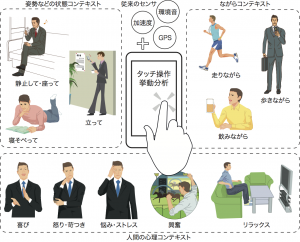
そして,このコンテキスト認識において,キーとなっているのが,昨今普及著しいスマートフォンです.スマートフォンは,大型のタッチパネルを備えてアプリをインストールできる携帯,あるいは小さなコンピュータと一般的には考えられていますが,我々の研究領域では,その中に搭載されたさまざまなセンサに注目が集まっています.代表的なセンサは,GPSや加速度センサですが,それ以外にも照度センサ,近接センサ,気圧センサ,ジャイロセンサなど種々のセンサが搭載されています.震災後は,放射能センサを搭載した端末も登場しています.また,WiFiやBluetoothといった通信モジュールやマイクなどもセンサとして活用する研究も多数発表されています.

ユビキタスコンピューティングシステム研究室でも,このスマートフォンを活用したコンテキスト認識の研究を行っていますので,代表的な研究成果を紹介したいと思います.

まず1つ目は,スマートフォンのタッチパネルをセンサとして活用したコンテキスト認識です.仕組みの前に,どんなことが可能になるかという例を示したいと思います.

overview

・タッチエリアからユーザの利き手を理解し,利き手に最適化された使いやすいUIに
・利き手と反対で使っているということから,食事中などのより詳細なコンテキストを認識
・タッチ操作のスキルを測定し,ユーザの修練度に応じて変化するUIに
・親指の長さから男女を識別し,性別に応じた情報の提供
・タッチ操作から快活度やストレスなど内面的な状態を推定

このようにこれまでの加速度センサやGPSなどでは把握できなかったコンテキストを認識できる可能性を感じています.ただ,Androidのアプリケーションを作成したことがある人なら,ピンとくるかもしれませんが,タッチ操作というのはアプリケーションごとに分離されていて,グローバルに取得すること自体が難しいという問題があります.

そこで,タッチ操作をアプリケーションに関係なくすべて取得するシステムの開発から着手しました.この研究は,新M1が夏から始めた研究ですが,なんと半年もたたずに国際会議に採録された上,その会議でBest Poster賞を受賞するという快挙でした.国内でもベストポスター賞を受賞しており,順調な滑り出しで,今後先に述べた夢のある応用例をいくつ実現できるか楽しみにしているところです.

研究室では,基本的に学生が主体的にテーマを考え,それに対して教員とディスカッションを重ねて,絞り込んでいくというスタイルを取っています.また,対外発表をエンカレッジしていますので,イケルと思った研究は,学年に関わらず,M1からどんどん発表していきます.この研究も新M1が夏から取り組み,半年間で,国内会議3回,海外会議1回もの発表をしています.実装も伴うため,かなり忙しくなりますが,どんどんチャレンジしていく人は大歓迎です.

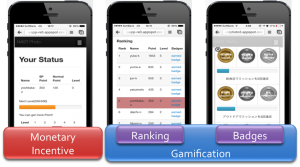
2つ目は,このようなスマートフォンを用いたセンシングを普及させるための仕組みについても研究しています.ユーザの端末を使ってセンシングすることをユーザ参加型センシングと呼び,1つの大きな研究テーマとなっているのですが,実用化という点では,本当にユーザがボランティアでセンシングに協力してくれるのか懐疑的です.センシングに対してお金を支払うことでユーザを獲得することもできるのですが,ユーザの端末を使うことで低コストで大きなエリアをセンシングするという目的と相反してしまいます.そこで,研究室では,ゲーミフィケーションと呼ばれる心理的満足度を取り入れ,金銭的対価を最小化しつつ,ユーザの参加率を改善する仕組みについて研究をしています.

naistphoto

実際に,研究室内でこのシステムを実験して,ゲームを楽しみつつ,お小遣いをゲットした学生さんもたくさんいました.私も200円ほどもらいました.研究室旅行で訪れた台湾でも,海外の実験として,このシステムを使いながら,台湾をセンシングするということもしました.

3つ目の研究は,こうした参加型センシングでも,過去にネット上に蓄積された情報を用いた研究です.特にFlickrやTwitterなどのソーシャルメディア上に蓄積されたデータを利用しており,ソーシャルセンシングとも呼ばれています.研究室のM1が開発したPhorecは,Flickrに蓄積された情報を分析し,アマチュアカメラマンをサポートするシステムです.撮りたいと思う写真をクリックすると,時間,季節,天気,位置,カメラセッティングといった情報を提供してくれます.このアプリは,種々のアプリケーションコンテストで高い評価を受けており,各種メディアにも取り上げられています.開発した学生は数十万の賞金でフルサイズカメラを手に入れたとか.


4つ目の研究は,スマートフォンを使った心拍数の推定という研究です.最近,健康維持を目的として,ウォーキングをする人が増えています.しかしながら,普段運動しない人が急に運動すると思わぬ体調不良を起こすこともあります.そこで胸に装着する心拍計などが販売されています.しかしながら,このような心拍計は,価格的にも装着の煩雑さからも普及に至っていません.そこで,考えたのがスマートフォンのセンサを駆使して,それだけで心拍数を推定できないかという研究です.このシステムでは,人の体格や普段の運動状況に加えて,地理情報(坂道なのか平坦なのか,どれくらいの傾きなのか)を考慮したモデルを作成することで,この人がこの道をこの速度で歩いたらこれくらいの心拍になるはずであると推定しています.この推定が案外うまくいったこともあり,この研究は,昨年,難関国際会議Ubicompに採択されました.

研究室では,このような心拍数だけではなく,睡眠や空腹度,健康ダイエット支援,レシピ支援など人間の生体情報を絡めたスマートライフの研究も重点的に行なっています.そして,その実験環境として,NAISTキャンパス内に,本当の家を作ってしまいました(笑 それがスマートハウスです.

smarthouse

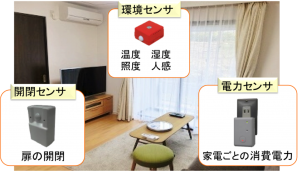
スマートハウスには,住人の位置を正確に補足可能な位置センサや電力センサ,温度や湿度を計測できる環境センサ,ドアの開閉センサや蛇口センサなど,実際の生活環境に多くのセンサが埋め込まれています.これらのセンサはすべて無線で連携していて,常時,住宅内に設置されたホームサーバに生活者のライフログとして蓄積されていきます.

このスマートハウスでは,以下の様な研究に取り組んでいます.
・コンテキストに応じたレシピ推薦システム
・見守りに必要なセンサ数の最小化
・電力消費と人間行動の自動的な関連付け
・ピーク電力削減に向けたゲーミフィケーション
・快適な昼寝支援システム
・空腹度推定システム

このようにユビキタスコンピューティングシステム研究室では,未来のユビキタス社会の実現を目指し,我々の生活の1つ1つをコンピュータやセンサ,ネットワークの力でインテリジェントにしていく研究をしています.研究室名に,「システム」とあるように,単なる理論やシミュレーションに終わらずに,システムとして動くものを作るところまでを推奨しています.なので,手を動かすのが好き,プログラミング大好きを募集しています.

最後になりましたが,私の個人的な方針で,月1回以上研究室イベントを開催することをミッションとしています.幸い,ノリのいい子たちが集まってくれて,ひっじょーに,楽しい研究室となっています.この様子は,学生Blogにちらほら登場しているので,こちらも読んでみてください.

長くなりましたが,ユビキタスコンピューティングシステム研究室をよろしくお願いします.見学や質問は随時受け付けています.

文責:准教授 荒川 (ara@is.naist.jp)

大規模システム管理研究室 ― Hadoop の投機的実行数は何故4なのか?―

大規模システム管理研究室では,未来の大規模超並列分散コンピューティング環境のための要素技術やビッグデータ解析に関する研究と,それらの応用として大災害に対するリスク管理やサービス・マネージメントに関する研究を行っています.今回は莫大な規模のサーバマシンから構成されるクラウド・コンピューティングに関するスケジューリング問題を通して研究成果の一端をご紹介します.

クラウド・コンピューティング環境

クラウド・コンピューティングは,莫大な数のサーバマシンを接続して分散コンピューティングを提供する計算環境の総称です.サーバ環境はデータセンター内に構築され,デスクトップPCからタブレットPC,モバイルフォンといった多様な端末がクライアントマシンとしてクラウド・コンピューティングサービスを利用しています.

クラウド・コンピューティングを提供するデータセンターでは,普及品レベルのサーバを増やして処理を並列化することにより,処理性能の向上を実現しています.このようなアプローチをスケールアウトと呼び,現在のクラウド・コンピューティングを支える基盤技術として普及しています.

scaleout_systemスケールアウト型コンピューティング・システム

クラウド上で実行されるキーワード検索やビッグデータ解析のような処理では,巨大なタスクを複数のサブタスクに分割し,多数のワーカと呼ばれるサーバマシン上で処理を行う,いわゆる大規模分散並列処理が行われます.Google のMapReduce やオープンソースの Hadoop が大規模な分散並列処理を行うソフトウェアフレームワークとして大変有名です.

キーワード検索を例に取ってみると,非常に大きいサイズ,例えば1TB (=1000GB) のファイルに含まれるキーワードを検索するとき,1台のマシンで検索するよりも,ファイルを1000台のマシンに等分割保存して1台あたり1GBの部分ファイルを検索する方が,探索にかかる時間は単純に1000分の1になります.(並列化のための前処理時間は並列台数が大きくなると増大しますが,それよりも処理時間の短縮効果が大きいときには有効です.)

落伍者の問題とバックアップ型スケジューリング

莫大な数のサーバマシンで並列処理を行うときに問題となるのは,マシン性能のばらつきです.またハードウェアの故障も,マシンの台数が100台,1000台と多くなってくると,無視できない問題になってきます.並列処理ではすべてのサブタスクの処理が完了してタスク全体の処理が完了となります.このような処理では,最も遅いサーバマシンが全体の処理時間を決定することに注意しましょう.この問題は落伍者の問題 (Issue of Stragglers) として知られています.大規模分散並列処理では,マシン性能のばらつきやハードウェアの故障にも柔軟に対応してタスクを高速に処理するスケジューリングが重要な役割を担っています.

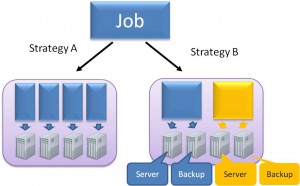
ここで簡単な例として4台のサーバで並列処理を行うことを考えてみましょう.

cloud_scheduling

二つのタスク・スケジューリング戦略

次の二つの戦略を考えます.

  • 戦略A (上図左側)

タスクを4分割し,4台のサーバで並列処理を行う.4台のサーバの処理すべてが終了した時点でタスク全体の処理が完了.

  • 戦略B (上図右側)

タスクを2つのサブタスクに分割し,1つのサブタスクをオリジナルサーバとバックアップサーバの2台で処理をする.オリジナル処理とバックアップ処理で,早く終わった方の結果を採用する.

戦略Aと戦略Bでは,どちらの方がクラウド・コンピューティングでは有利でしょうか?

まず全部の処理が完了するまでの処理時間を考えましょう.1台のサーバでタスク全体を処理するのにかかる時間を1とすると,戦略Aではタスクを4分割しているので1台当たりの処理時間は1/4,うまくいけば1/4程度の処理時間でタスクを完了することが可能です.

一方の戦略Bでは,タスクを2分割しているので1台当たりの処理時間は1/2,うまく処理が行われても1/2の処理時間がかかります.タスク全体の処理時間の短縮を目指す立場からすると,戦略Aの方が分割数が多い分,効果的に時間を短縮できそうです.

次に4台のサーバの内,1台が故障した場合を考えてみましょう.戦略Aでは4台のサーバの処理結果が返ってこないと処理が終了しませんから,故障の場合はタスク処理を完了することができません.一方,戦略Bでは2台に同じ処理をさせていますから,1台が故障した場合でもタスク全体の処理を完了できます.つまり,戦略Bは単純な分割・並列処理と比べて故障に耐性があることがわかります.

それではCPUの性能差や負荷状況によって処理時間にばらつきがある場合,どちらの戦略の方が有利でしょうか?

この問題を考えるためには,戦略Aや戦略Bによるタスクの処理メカニズムを確率的に分析する必要があります.簡単に説明すると,この問題は,複数の確率変数列の最大値がどのような分布に従うかという問題に帰着し,数理的に解析を行うと戦略Aや戦略Bのタスク処理時間の分布を導くことができます.この分析を行った結果,いろいろと面白いことがわかってきました.

まずサーバの処理時間のばらつきが大きければ大きいほど,戦略Bの効果が高いことがわかりました.しかもばらつきが大きいときは並列処理を行うサーバの台数を100台,1000台と増やすほど戦略Bがより効果的になることも判明しました.さらに,ハードディスクの応答が遅くなるなどの中途半端な故障によって処理時間が極端に長くなるような場合には,戦略Bのバックアップ型スケジューリングが効果的であることが明らかになりました.

実装に関する面白い結果として,一つのサブタスクを処理するサーバ数は3台から4台あれば十分であること,5台以上は処理時間がそれほど改善されないことがわかりました.Hadoop では,タスク処理の失敗を見越して他のサーバにタスクを振り直す投機的実行という機能がありますが,この投機的実行の最大回数はデフォルトでは4と設定されています.このデフォルトの値は,分析を通じて得られた結果と合致しており,このような根拠の下で投機的実行の最大回数が設定されていることを改めて認識した次第です.

ここではタスクの処理時間についての話題を紹介しましたが,クラウド・コンピューティングで重要な問題の一つに,データセンターが莫大に消費する電力をどのように削減するか,という問題があります.消費電力という観点から見るとパフォーマンスがよいとされた戦略Bは,サーバを稼働させる時間が全体的に多くなるためにあまりよい戦略とは言えません.クラウド・コンピューティングではタスク処理時間と消費電力量がトレードオフの関係にあり,そのためタスク処理時間を短縮しつつ消費電力量も削減するジョブ・スケジューリング法が重要な研究テーマとなっています.

 大規模クラウド・コンピューティング実験システムと始動する研究プロジェクト

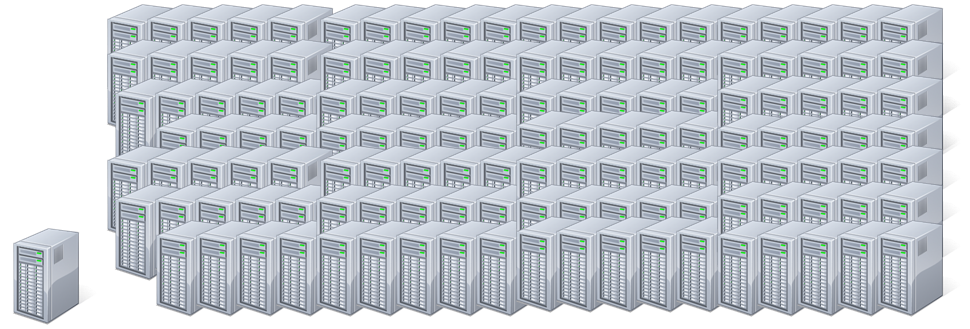
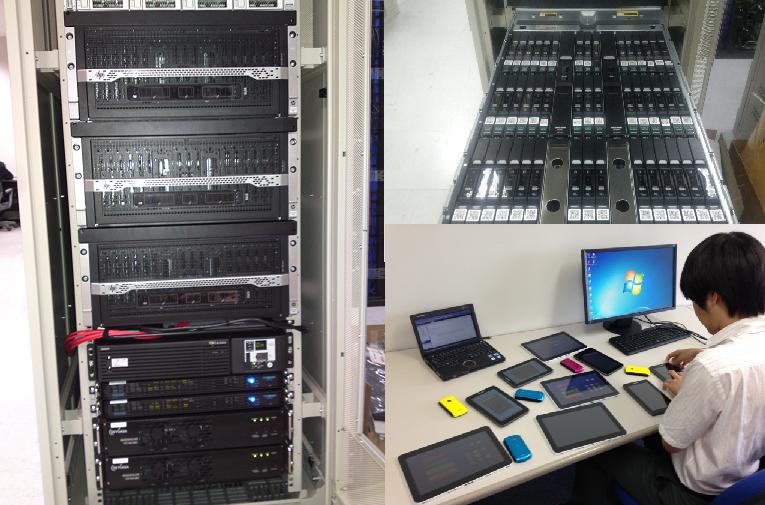
大規模システム管理研究室の大きなニュースとして,大規模分散並列処理実験システムがこの度導入されました.HP の MoonShot と呼ばれるシステムがベースになっていて,カートリッジ型サーバマシンを1シャーシで45台収納,1ラックに3シャーシを搭載した高密度型サーバクラスタシステムです.当研究室では全135ノード中100台を専有し,Hadoopが稼働する分散並列処理システムとして実験用に使用します.

実験設備写真

 大規模クラウド・コンピューティング実験システム

 このシステムを使って以下の実験やアプリケーションの構築を行っていく予定です.

  • モバイルクラウド実装プロジェクト

クラウド・コンピューティング環境とタブレット端末を高度に連携させたモバイル情報収集分析プラットフォームを構築し,コンテンツデリバリや大規模分散メモリキャッシング,MapReduce型アプリケーション,特に大規模非構造データに対する知識獲得処理を行うアプリケーションを開発します.

  • スケールアウトクラウド実測プロジェクト

Hadoop環境において,大規模分散並列処理の性能を実測によって評価を行います.具体的には,ノード数がスケールすることによる処理性能の改善効果やノードの性能をばらつかせることによる処理性能の劣化度合い,タスクスケジューリング方式の性能評価を実機で行う予定です.

  • 省電力エネルギー制御プロジェクト

大規模データセンターの電力消費量を抑えつつタスク処理を効率的に行う電源管理スケジューリングを開発します.例えばタスクの到着パターンに適応した電源管理法やタスクの優先クラスによるスケジューリング,サーバ群レベルの電源管理法について検討していきます.

このシステムを使って私たちと一緒に未来のクラウド・ワールドを研究開発していきませんか.